


How the BCPoker Shuffle Is Created
BCPoker uses a decentralized random number generator to determine the order of the deck. Input from every player seated at the table contributes to the shuffle, so the result does not rely on one private source. The combined input produces the card sequence used for that hand.
The process applies KECCAK-256, the cryptographic hash function used by the Ethereum network. This function is designed to resist reverse engineering of the inputs from the finished hash. The platform can therefore release verification data after play without exposing the deck while decisions are still being made.

The last one was received 3 minutes ago
Cryptographic Checks After Every Completed Hand
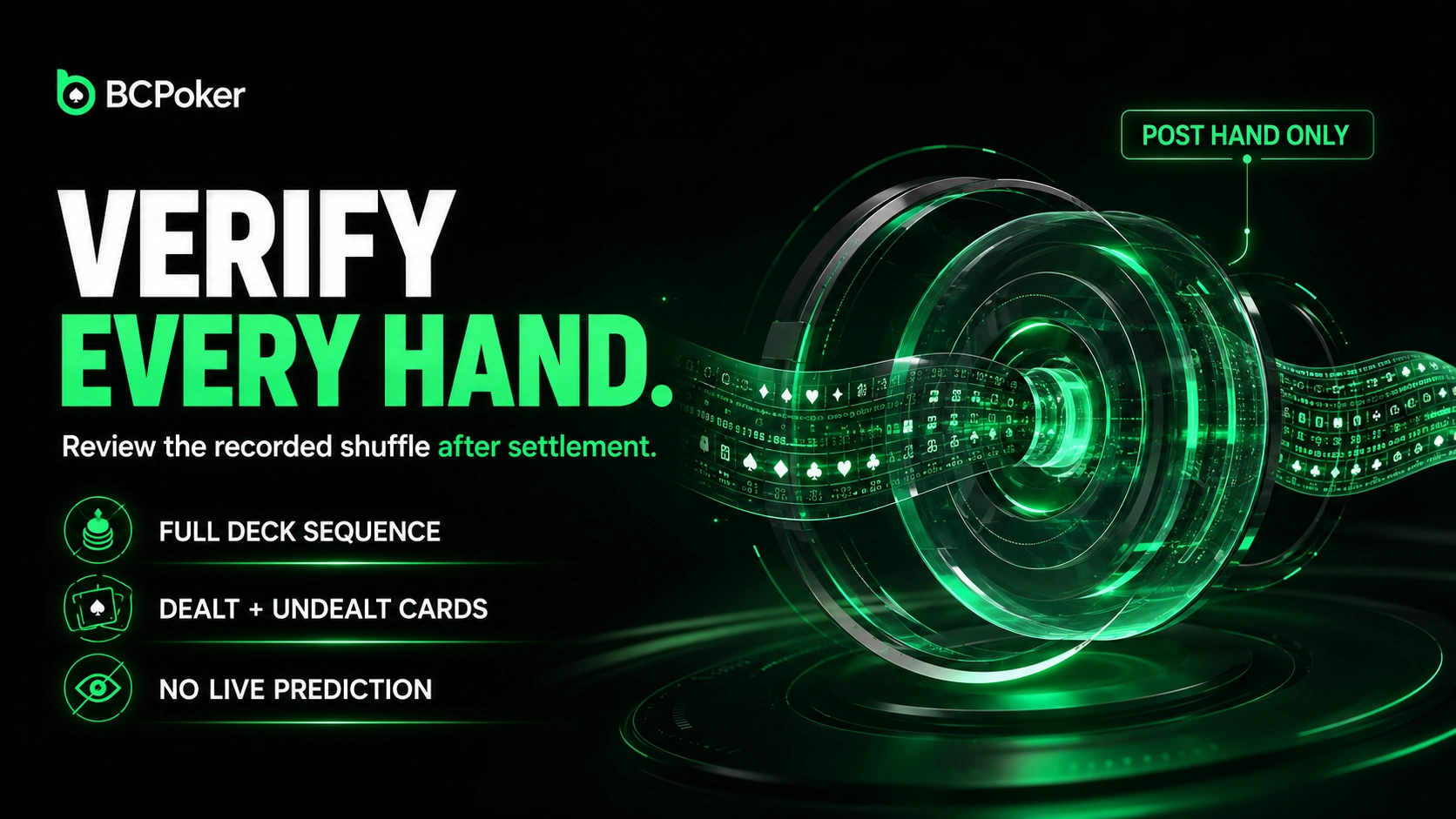
Once a hand has ended, players can verify that the deck order came from the recorded shuffle. The review also shows cards that remained undealt, making it possible to compare the complete sequence with the cards revealed during play. Verification becomes available after settlement, so it cannot be used to predict live cards.
This record gives players a direct way to examine a disputed or unusual outcome. A hand does not need to be judged only by appearance, memory, or probability. The published information provides a technical reference for checking whether the final deal matches the generated sequence.
BCPoker Controls Against Prohibited Assistance
BCPoker restricts external tools that can create an unfair informational advantage. The protection system blocks external HUDs, poker trackers, live assistance tools, seating scripts, solvers, and data mining software. These restrictions apply at the system level rather than depending on an optional player setting.
The same controls target emulators, virtual machines, remote desktop programs, and screen sharing applications. Blocking these channels reduces the chance that automated scripts or another person can influence decisions from outside the table. It also limits the transfer of live table information into software that is not permitted by the platform.
Account Behavior and Player Presence Reviews
Automated behavior analysis examines activity for patterns linked to bots and prohibited decision support. Unusual conduct can be flagged for investigation rather than being accepted as normal account activity. The review considers behavior across play instead of relying on a single difficult or unexpected decision.
Liveness verification can also confirm that a real person is present when a check is requested. A 3D facial check connects the account session with a human participant at that moment. This measure targets automated participation and account use by an undisclosed third party.
Player Responsibilities During a Fairness Review
Fairness controls work alongside the rules followed by each participant. Players should use their own account, make decisions independently, and avoid any program that collects or supplies prohibited table information. These steps keep personal conduct consistent with the technical controls applied by the platform.
If a hand appears inconsistent, save its history and identify the exact card sequence or action being questioned. A specific record is more useful than a general claim that the outcome felt unlikely. Support can then examine the relevant hand details and account activity connected with the report.